

The European languages are members of the same family. Their separate existence is a myth. For science, music, sport, etc, Europe uses the same vocabulary. The languages only differ in their grammar, their pronunciation and their most common words. Everyone realizes why a new common language would be desirable.
When a warehouse tenant moves out, it’s easy to assume the space will be back on the market quickly. In reality, that’s rarely the case. The tenant vacates, the landlord walks the space, and the process slows down. What should be resolved in a few weeks often takes much longer due to unclear lease responsibilities, back-and-forth over repairs, contractor availability, and minor issues that aren’t addressed early. While those details are being sorted out, the space stays vacant and rent isn’t coming in. After working with brokers, landlords, and tenants across many lease transitions, I’ve seen the same issues surface again and again. Below are the seven that cause the most delays.
When a warehouse tenant moves out, it’s easy to assume the space will be back on the market quickly. In reality, that’s rarely the case. The tenant vacates, the landlord walks the space, and the process slows down. What should be resolved in a few weeks often takes much longer due to unclear lease responsibilities, back-and-forth over repairs, contractor availability, and minor issues that aren’t addressed early. While those details are being sorted out, the space stays vacant and rent isn’t coming in. After working with brokers, landlords, and tenants across many lease transitions, I’ve seen the same issues surface again and again. Below are the seven that cause the most delays.
1. Damaged or Non-Functional Dock Doors
Dock doors take a beating. After years of forklifts and loading schedules, hinges bend, seals tear, and motors quit working. Sometimes a tenant will patch things just enough to get through their last year, but it doesn’t pass inspection when they leave.The problem is that fixing dock doors isn’t simple. You need a commercial door specialist, not just a handyman. Scheduling can take weeks, especially if parts need to be ordered.
And if the landlord and tenant are fighting over who caused the damage, nothing moves forward while they argue. A broken dock door doesn’t just look bad, it makes the space functionally incomplete. No one’s signing a lease on a warehouse they can’t use immediately.
2. Floor Damage, Coatings, and Stubborn Markings
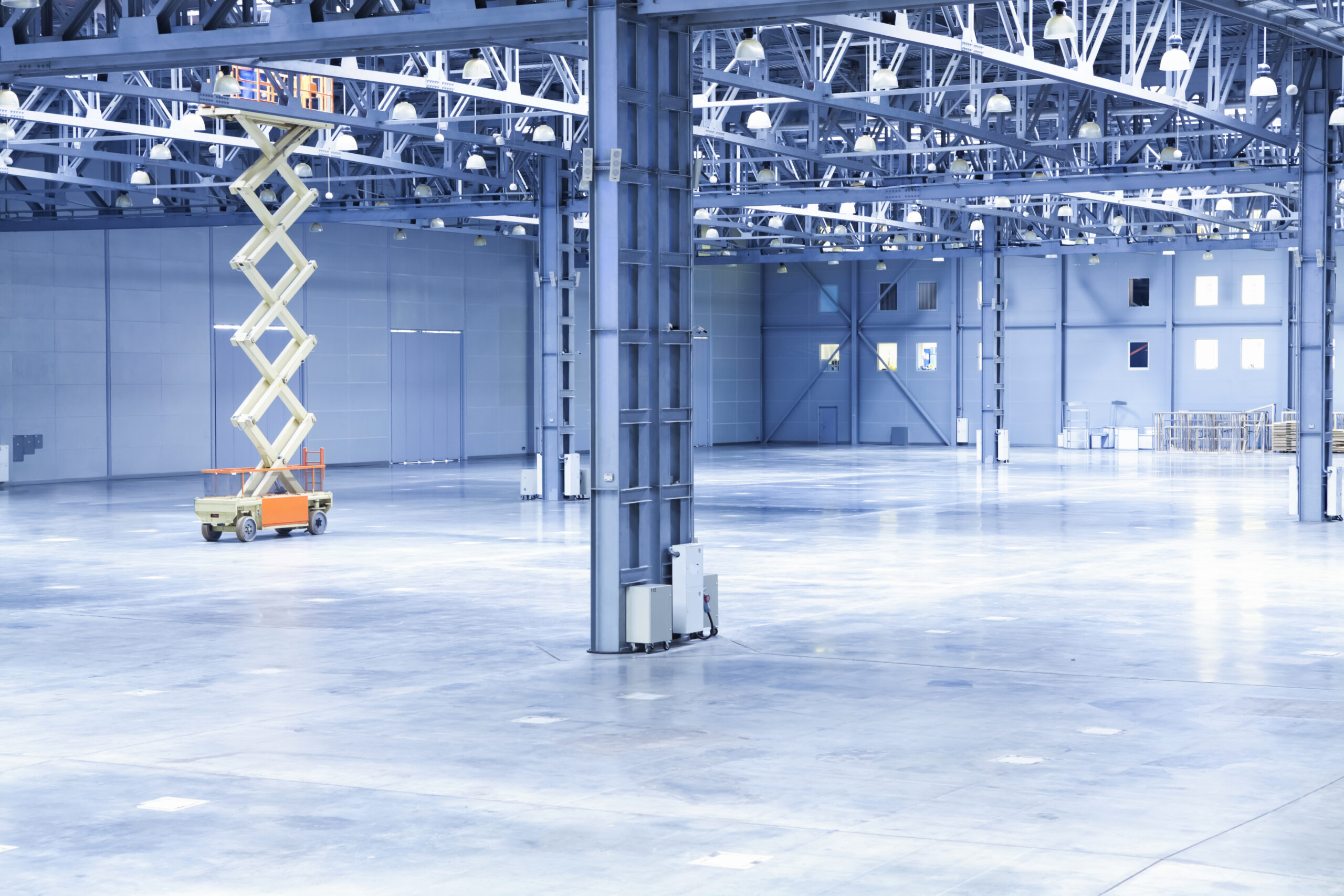
Warehouse floors tell the story of what happened in the space. Forklift scars, paint overspray, oil stains, epoxy patches, tape residue from old layouts, it all adds up. Most leases require the tenant to return the floor in reasonable condition, but “reasonable” is subjective. What the tenant considers normal wear and tear, the landlord sees as damage. And removing years of markings without resurfacing the entire floor is harder than it sounds.
If the floor isn’t addressed before showings, it gives potential tenants a reason to lowball their offers or ask for a TI allowance to fix it themselves. Either way, the landlord loses.
Learn how we plan every shipment—from initial booking to delivery—with built-in checks and contingency measures to avoid delays.
Explore our GPS tracking, automated scheduling, and digital proof-of-delivery tools that give clients real-time visibility and control.
See how our regularly maintained, modern fleet is equipped for all freight types—ensuring both safety and speed.
3. Electrical and Lighting Issues
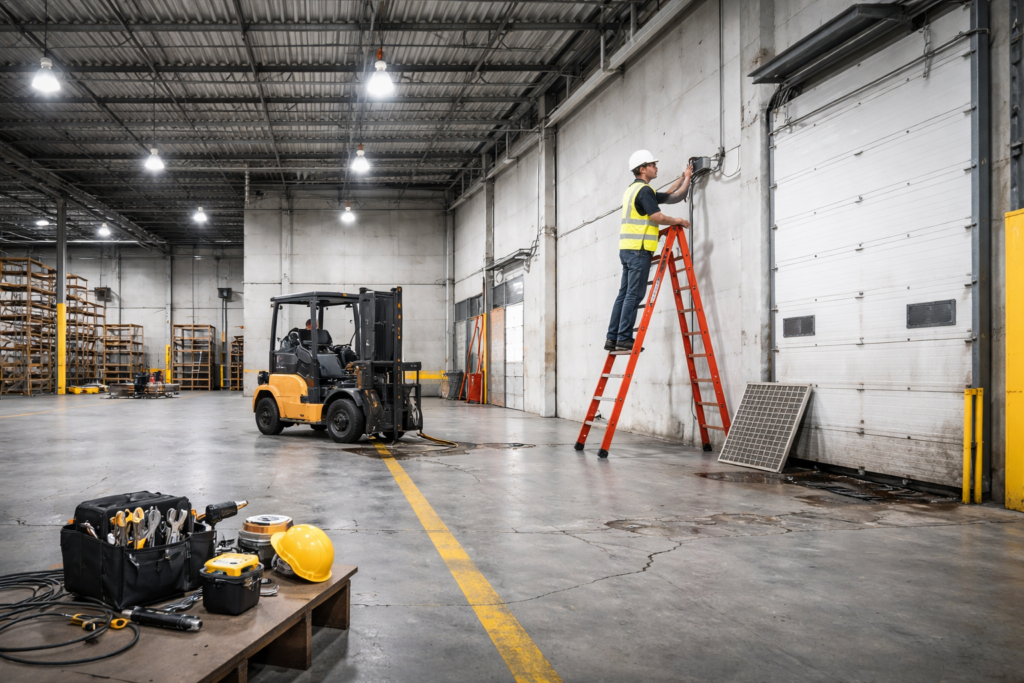
Tenants pull wire. They add temporary power drops. They remove light fixtures they installed and never replace the originals. Sometimes they leave half the warehouse dim because they only lit the sections they were using.
When the space is vacated, what’s left is a patchwork electrical system that doesn’t meet code or doesn’t provide adequate lighting for a new tenant. And since most commercial spaces require a licensed electrician for any real work, this isn’t something a maintenance guy can knock out in an afternoon.
Electrical work also tends to uncover other issues, outdated panels, missing permits, or wiring that was never done right to begin with. That’s when a small repair turns into a costly project.
4. Abandoned Racking, Equipment, and Debris
You’d be surprised how often tenants leave things behind. Sometimes it’s intentional, racking that’s bolted in and expensive to remove. Sometimes it’s just oversight, a pallet of old shrink wrap, a broken pallet jack in the corner, scrap metal piled outside.
The landlord can’t show the space properly with someone else’s junk still in it. But tracking down the old tenant to come back and clear it out is nearly impossible once they’ve moved on. So the landlord either has to hire a removal crew or sit on the problem while they figure it out.
And if there’s steel racking involved, it’s not a quick demo. It has to be unbolted safely, hauled out, and disposed of. That’s a multi-day job, minimum.
5. Communication and Data Wiring Left in Rafters
This one’s invisible until you look up. Tenants run CAT6, fiber, phone lines, and who-knows-what-else through the ceiling over the years. When they leave, they rarely take it down.
It doesn’t seem like a big deal until the new tenant’s IT team shows up and finds a tangled mess of old wiring they don’t want to deal with. Or until a building inspector flags it during a walk-through.
Removing it properly means getting a lift, cutting it down safely, and hauling it out. It’s tedious work that no one wants to bid on for a reasonable price, so it just doesn’t get done.
6. Exterior Damage, Fencing, and Signage Removal
The outside of the building matters just as much as the inside. Faded tenant signage still mounted on the front. Chain-link gates left open or damaged. Cracked pavement around the loading area. Graffiti that appeared after the tenant moved out and before the landlord noticed.
These issues hurt curb appeal, and in industrial real estate, first impressions still count. A potential tenant driving by won’t stop for a tour if the property looks neglected.
Signage removal sounds simple, but it often leaves holes, discoloration, or mounting hardware that needs to be patched and painted. Exterior contractors are also notoriously slow to schedule unless you have an existing relationship.
7. Too Many Contractors, No Coordination
Even when the landlord or tenant knows what needs to be done, executing it becomes a nightmare. You need a door company, an electrician, a floor crew, a demo team, a cleaning service, maybe a painter.
Each contractor works on their own schedule. They don’t communicate with each other. One crew’s work creates more work for another crew. Change orders pop up. Invoices don’t match the estimates. And someone,usually the landlord or property manager,is stuck playing general contractor without the time or expertise to do it well.
This lack of coordination is what turns a three-week project into a three-month ordeal.